Available
101 Medical Autopsy Cases
101 Medical Autopsy Cases
Couldn't load pickup availability

ISBN
ISBN
9789352706129, 9352706129
Authors
Authors
Nandita Bharadwaj Kakkar
Publisher Date
Publisher Date
February 28, 2019
Publisher
Publisher
Jaypee Brothers Medical Publishers
Page count
Page count
798
Table of Contents & Sample Chapter
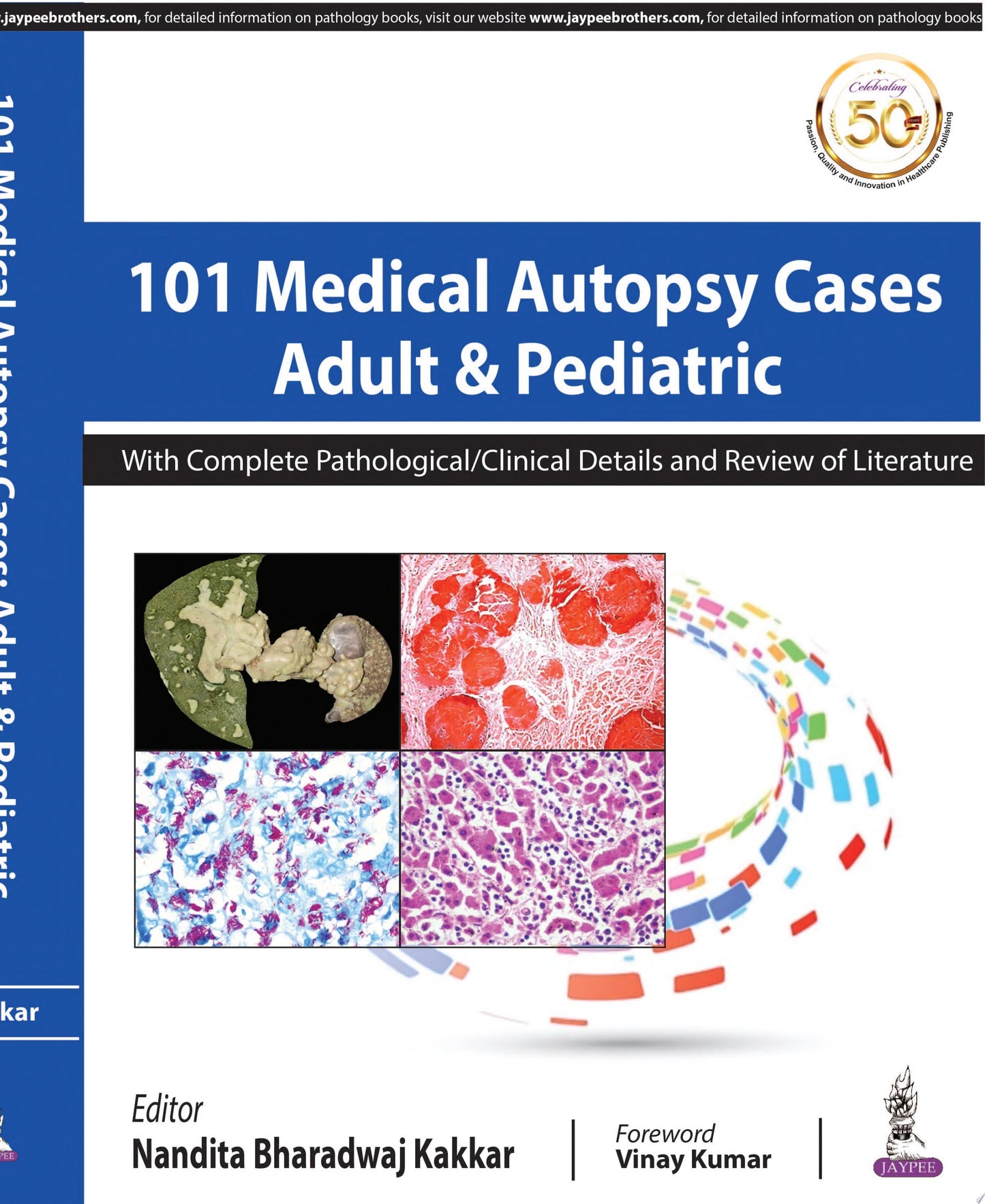
This book presents a comprehensive, case-based compilation of 101 medical autopsy cases, covering both adult (48 cases) and pediatric patients (53 cases, including children, infants, neonates, stillbirths, and terminated fetuses). Each case is thoroughly described with clinical and pathological details, making it the first book in world literature to integrate complete autopsy findings, gross and microscopic images, and literature review in a single resource. Designed for clarity and practical learning, it provides a unique educational journey through the life and medical course of each patient.
Key Features
- 101 detailed autopsy cases: 48 adult and 53 pediatric, covering a wide range of conditions
- Cases grouped by system or disease type: hematologic disorders, malignancies, infections, hepatobiliary and pancreatic disorders, cardiovascular system, systemic vasculitides, primary renal mucormycosis, histiocytosis, primary immunodeficiency, nephrotic syndromes, congenital heart disease, storage disorders, and pediatric renal cystic diseases
- Comprehensive case structure including clinical details, investigations, clinical diagnosis, autopsy/histopathological findings, gross and microscopic images (3,000+), final autopsy diagnosis, literature review, commentary, take-home messages, and references
- Introduces concepts like medical autopsy, systemic vasculitides, tubercular meningitis, and pediatric renal cystic diseases for better understanding
- Extensive gallery of gross and microscopic photographs for visual learning
- Designed for pathologists, medical physicians, pediatricians, neonatologists, obstetricians, radiologists, and medical students
- Case-based format enhances teaching, learning, and clinical correlation