Available
An Introduction to Assistive Technology
An Introduction to Assistive Technology
Couldn't load pickup availability

ISBN
ISBN
9781536189704, 1536189707
Authors
Authors
Suraj Singh Senjam
Publisher Date
Publisher Date
January 1, 2021
Publisher
Publisher
Nova Science Publishers
Page count
Page count
234
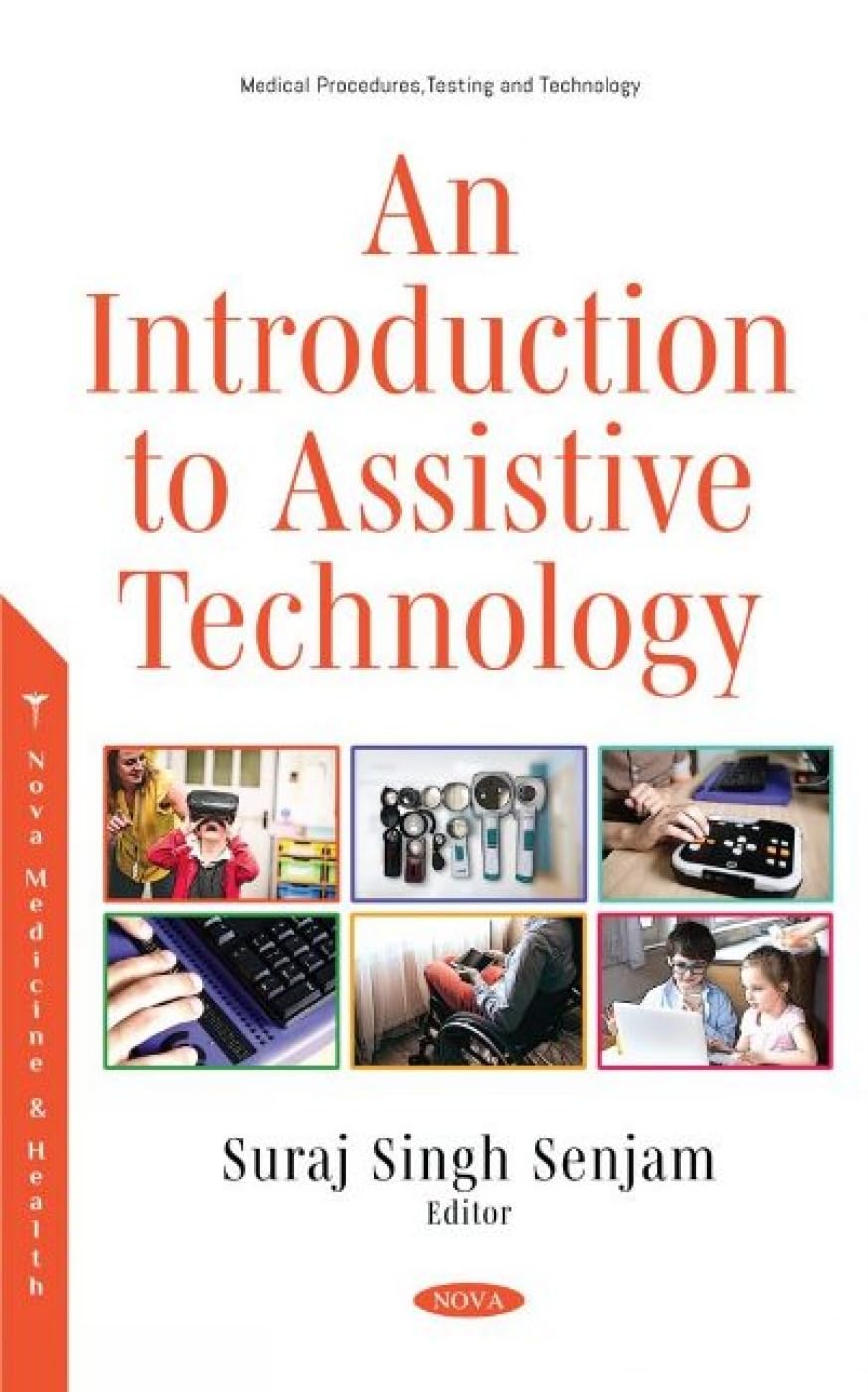
Globally, over one billion individuals live with some form of disability, yet only a small proportion have access to adequate rehabilitation services. Assistive technology (AT) plays a critical role in bridging this gap by enhancing functional independence and improving quality of life for people with disabilities and health impairments. This first edition offers a comprehensive overview of assistive technologies used in habilitation and rehabilitation settings. It is designed to support professionals, educators, and researchers by presenting current evidence, innovative tools, and practical applications of AT across diverse populations. Through its chapter-wise organization, the book highlights both established and emerging technologies that address physical, sensory, cognitive, and developmental needs, with a strong emphasis on patient-centred and evidence-based approaches.
Key Features
- Comprehensive overview of assistive technologies used in habilitation and rehabilitation services
- Evidence-based discussion on AT interventions for children and adolescents with neurodevelopmental disorders
- Coverage of innovative tools, including computer-based and vision-enhancement technologies
- Detailed exploration of assistive devices for visual impairment, including classifications and daily living aids
- Practical relevance for multidisciplinary professionals, such as rehabilitation specialists, eye-care workers, educators, and community-based practitioners
- Focus on advanced ICT solutions for improving bathroom safety while maintaining user privacy, particularly for older adults
- Insights into assistive software applications for children with autism spectrum disorders
- Review of virtual reality–based interventions for neurodegenerative diseases, highlighting positive therapeutic outcomes
- Emphasis on patient-centred design and adoption pathways to improve acceptance and effective use of assistive technologies