Available
Applications of the Unified Protocols for Transdiagnostic Treatment of Emotional Disorders in Children and Adolescents
Applications of the Unified Protocols for Transdiagnostic Treatment of Emotional Disorders in Children and Adolescents
Couldn't load pickup availability

ISBN
ISBN
9780197527894, 0197527892
Authors
Authors
Ehrenreich May , Kennedy
Publisher Date
Publisher Date
August 20, 2021
Publisher
Publisher
Oxford University Press
Page count
Page count
224
Table of Contents & Sample Chapter
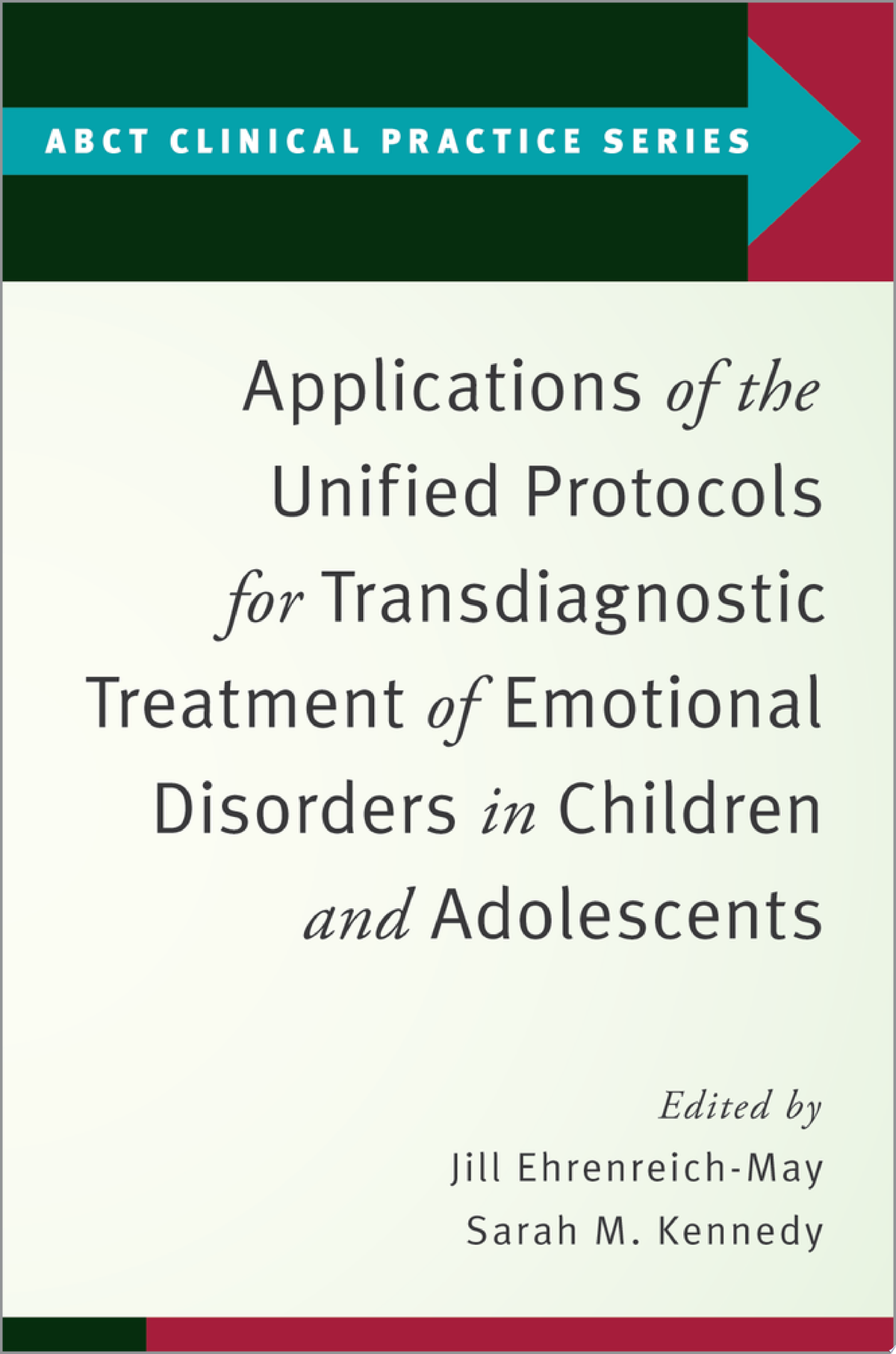
Applications of the Unified Protocols for Transdiagnostic Treatment of Emotional Disorders in Children and Adolescents is a clinically focused guide designed to help practitioners and researchers effectively implement the Unified Protocol for Children (UP-C) and Adolescents (UP-A). Grounded in a transdiagnostic framework, the book addresses emotional disorders by targeting shared underlying mechanisms rather than disorder-specific symptoms. It emphasizes flexible, evidence-based application of the Unified Protocols across the real-world settings where children and adolescents most commonly receive care, including community mental health services, pediatric primary care, and telehealth environments. By bridging research and practice, this volume supports clinicians in delivering consistent, developmentally sensitive, and efficient treatment for youth with diverse emotional difficulties.
Key Features:
- Transdiagnostic Treatment Approach: Focuses on shared emotional processes underlying multiple disorders rather than single-diagnosis interventions.
- Practical Application of UP-C and UP-A: Provides clear guidance on implementing core principles and modules with children and adolescents.
- Broad Clinical Settings: Addresses use in community mental health, pediatric primary care, school-linked services, and telehealth.
- Developmentally Informed Care: Tailors strategies to the cognitive, emotional, and behavioral needs of children and adolescents.
- Clinical Flexibility: Supports adaptation of the protocols to diverse populations, presentations, and treatment contexts.
- Research–Practice Integration: Useful for both clinicians delivering care and researchers studying transdiagnostic interventions.